Hybrid Ecological Networks: A Speculative Exploration of Network Design

In the rapidly evolving landscape of learning network design, there’s a critical need to construct networks that are at the same time resilient and adaptable, equitable and accessible, authentically engage the human and more-than-human, and are capable of handling increasingly complex challenges. One response might be the speculative concept of the hybrid ecological network — a living synthesis of principles from material ecology, movement ecology and corridor ecology that allows a reimagining of distributed network design.

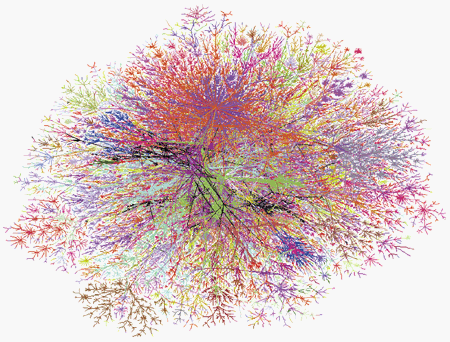
Midjourney – movement & material ecology

Material Ecology: Reimagining Nodes

Neri Oxman’s pioneering work in material ecology offers a robust framework for conceptualizing nodes within networks. Each node, akin to a unique material entity in Oxman’s schema, possesses inherent characteristics that enable complex interactions and gives each node a unique material identity (material ontology) that reflects a symbiosis between the human and more-than-human worlds.

Material ecology integrates design and computational biology with traditional fabrication and building processes. It emphasizes the idea that materials are not simply passive substances used to build objects; they participate in the ecological systems in which they’re situated.

If we apply this framework to network design, nodes in the network can be viewed as material entities with their own unique attributes, capabilities, and contexts. Nodes are no longer merely points of connection; instead, they’re akin to unique material entities possessing distinctive characteristics that influence their interactions and behaviour within a network.

In a speculative hybrid ecological network, ‘material’ characteristics could manifest in multiple ways — a node’s ability to process and generate information (its computational capacity), its connectivity to other nodes (its position within the network), or even its resilience in the face of network disruption.

These characteristics aren’t static — just like in Oxman’s articulation of material ecology, they’re continually shaped by their interaction with/in the network environment. A node might develop new ‘material’ characteristics (such as enhanced computational capacity) or lose others (like connectivity) based on its interaction with the rest of the network. This dynamism gives each node a unique material identity or ontology, reflecting the symbiotic relationship between nodes and their network environment.

This perspective enables a more nuanced understanding of networks. By acknowledging the inherent variability and dynamism of nodes, we can design more flexible, resilient networks that can adapt to changing circumstances—much like a natural ecosystem. This outlook resonates with the ethos of material ecology, where the synergy between design, materials, and environment leads to innovative and regenerative solutions.
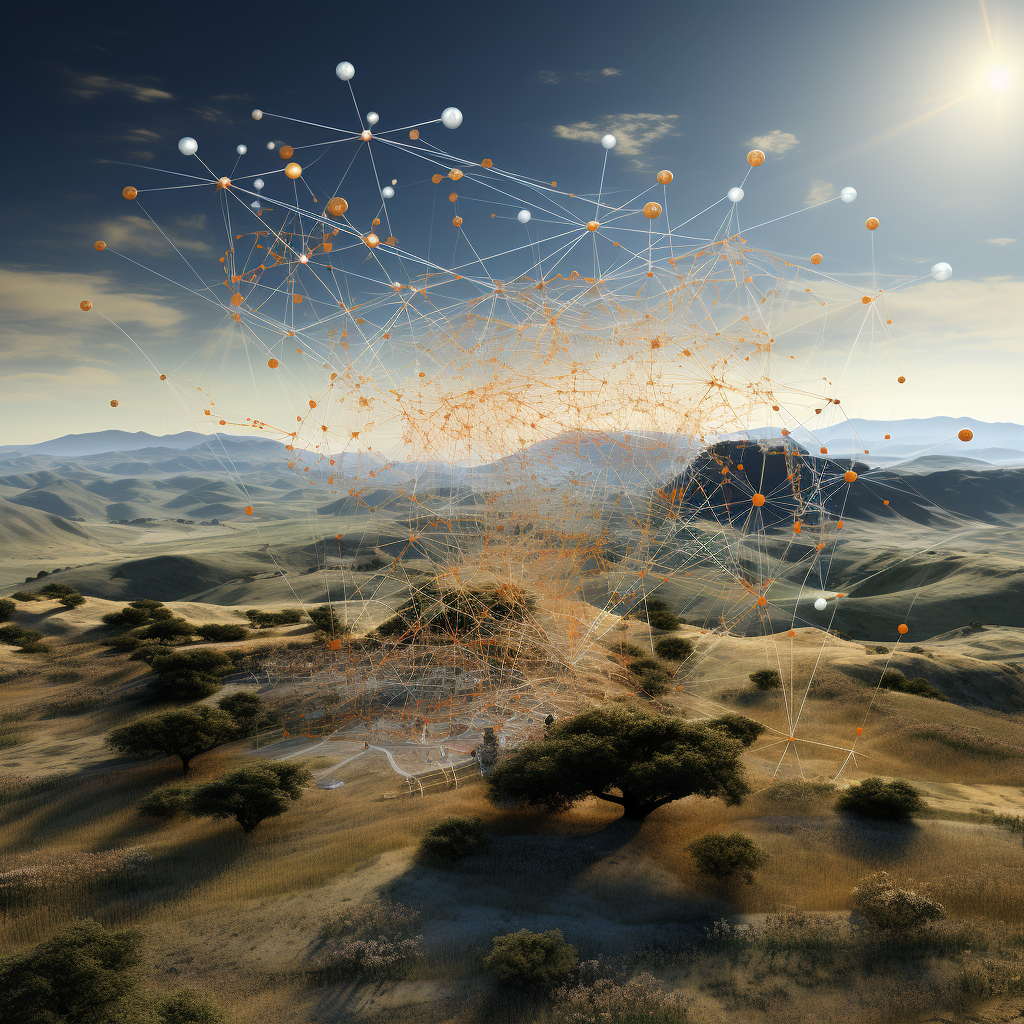
Midjourney – envisioning network flows I

Movement Ecology: (Re)envisioning Network Flows

Thomas Nail’s exploration of movement ecology provides significant insights into understanding network flows. His theoretical perspective portrays information and ideas as migratory entities, subsequently reshaping the way we perceive the traversal of knowledge and ideas within networks.

Nail postulates that society is essentially constituted by movement, with entities (be they people, objects, or ideas) constantly in flux.

Applying Nail’s philosophy to network design, we can reframe the way we conceptualize the flow of information and ideas within networks. Rather than viewing data as static entities being transferred from point A to point B, Nail’s theories encourage us to see information and ideas as migratory entities.

In this paradigm, information (experience, knowledge, skills) moves, evolves, and interacts with the nodes it encounters, akin to how creatures migrate and interact with their environment in natural ecologies. Just as migratory patterns in nature aren’t purely linear but are influenced by various environmental factors and the organisms’ own agency, the traversal of knowledge and ideas within networks isn’t merely dictated by the network structure but is also influenced by the ‘behaviour’ of the information itself and the nodes with which it interacts.

For instance, some pieces of information might ‘migrate’ quickly across the network due to their relevance or urgency, while others might move slowly or even become ‘dormant.’ The nodes that this information encounters can be seen as ‘habitats’ (see corridors, below) that may alter the information, hold onto it temporarily, or help it evolve or develop further.

This dynamic view of network flows allows for a richer understanding of networks. By acknowledging the agency of information (leading to the potential autonomy of data objects) and the impact of nodes on its movement, we can create networks that are more adaptable and effective in facilitating the migration of knowledge and ideas. This conceptualization of networks as motion interweaves with the hybrid ecology view of networks as vibrant, living ecosystems.

Corridor Ecology: Pathways in Networks

Corridor ecology, an interdisciplinary field including biodiversity corridors and landscape linkages, lends principles crucial to designing pathways within networks. The proposed ‘corridors’ enhance inter-node connectivity and encourage diversity, mirroring the facilitation of movement and genetic diversity through biological corridors in nature.

Seeing network pathways as analogous to biodiversity corridors can open our perception of them as dynamic conduits that facilitate the flow of information and interactions, similar to how ecological corridors facilitate species movement. They are not just passive infrastructure but active and vital parts of the network that can adapt and evolve to better serve the network’s needs.

Ecological corridors are essential for connecting fragmented habitats, allowing species to move and interact — often over multiple generations — thereby enhancing biodiversity, resilience and integration with the surrounding environment. Similarly, in a network context, these ‘corridors’ or pathways can connect different nodes — individuals, groups or systems — and allow for steady, organic evolution of connections between nodes that might otherwise remain siloed from one another. They invite the transfer, mixing, and evolution of ideas and knowledge and foster intellectual diversity and innovation.

By designing pathways that facilitate diverse interactions, we can create networks that are not only more cohesive but also more resilient. These networks can better withstand shocks (such as the loss of a node or disruption to network connections) and are more adaptable, capable of evolving based on the needs of their nodes and the environment.

In addition, the concept of corridor ecology introduces the idea of ‘permeability,’ which refers to how conducive a landscape is to species movement. In network design, this would translate to how easily information and ideas can flow through the network. Designing a learning network with high permeability would mean creating pathways that enable the smooth and efficient flow of knowledge and ideas.

By integrating corridor ecology principles, we can transition from a perception of networks as static, rigid structures to an understanding of them as dynamic, adaptable, and resilient systems, much like ecological landscapes themselves.

Midjourney – envisioning network flows II

Computational Gradients

Computational gradients, representing the dynamic spectrum of data processing and learning capabilities, are incorporated into network design. Nodes adapt and evolve flexibly based on their interactions with the environment and other nodes, reinforcing the network’s dynamism. Gradients can represent the varied capacity of different nodes in the network (individuals, institutions, and technologies) to process, generate, and leverage knowledge and information. Some nodes, equipped with a deeper or richer constellation of resources or positioned advantageously within the network, might be situated on a ‘high’ gradient, processing, creating connections and sharing knowledge at a higher rate.

Conversely, nodes on a ‘low’ gradient might have limited access to information or the means to process it effectively. In a rapidly evolving digital society, the position on this gradient is not fixed; nodes can move along it, driven by technological advancements, education, and societal changes. In the context of a hybrid ecological network, capacities are not uniformly distributed but varied across a spectrum or gradient in a network, influenced by multiple social, economic, and technological factors.

Receptive Learning Networks

Incorporating the principles of receptive learning, nodes in the network transition from passive receivers to active learners, which draws from Bruno Latour’s ideas that networks are both constituted by and constitute their components, making them receptive as they respond to the characteristics and behaviours of their components. and other network theorists. This perspective introduces a radical openness wherein nodes absorb, process, and respond to new knowledge, thereby fostering a dynamic learning environment.

Traditionally, networks are seen as conduits for the transfer of information from one node (or point) to another.  A receptive learning network proposes a significant shift in this paradigm. Drawing from the principles of receptive learning, nodes within the network are reimagined not as passive receivers but as active learners (akin to material, movement, and corridor ecologies). This shift is transformative, positioning each node as an active participant in the network, contributing to and shaping the information that flows within it. Each node actively contributes to the network, and the ‘shape’ or state of the network is continuously evolving based on the actions and interactions of its nodes.

Receptive learning, in essence, emphasizes the importance of active engagement and receptivity to new knowledge. In the context of networks, this translates to nodes that are capable of not just receiving but absorbing, processing, and responding to new information. This could mean refining or transforming the information based on the node’s unique context or generating completely new information as a result of learning processes.

In the context of a hybrid ecological network, each node—whether an individual, an organization, or an AI system—is continuously learning and adapting. This fosters a dynamic learning environment within the network, allowing it to stay responsive and resilient in the face of new information or changing contexts.

In essence, the network becomes a vibrant, living ecosystem of learning and adaptation, creating a complex, rich, and diverse environment for the generation and flow of knowledge and experience.

Emergence of Hybrid Ecological Networks

The integration of these ecologies invites a radically open framework that yields a speculative approach to network design that engages the complexity, interactivity, and adaptability found in natural ecosystems.  This innovative design interweaves the complexities of material ecology, the directed flows of movement ecology, the interconnectedness of corridor ecology, the evolving computational gradients, and the dynamic principles of receptive learning. In this model, each node — whether an individual, an ecosystem, a more-than-human actor, a group, or automated system — actively engages in the learning process. Knowledge transfer thus evolves from a unidirectional process to a continuous cycle of interaction, adaptation, and evolution.

Each node in the network has the capacity itself to become an active participant more than just a passive presence — one capable of engaging with, processing, and responding to new knowledge and new experiences. This dynamicity and adaptability mark a radical departure from traditional, static network designs and open possibilities for the creation of more resilient, adaptable, and effective networks.

Hybrid ecological networks, while theoretical, underscore the potential of new transdisciplinary thinking, demonstrating how insights from diverse fields can converge to innovate upon established paradigms.

Given the escalating complexity of global ecological and social challenges, the demand for more resilient, adaptable, and interconnected learning networks is paramount. While speculative, hybrid ecological networks propose a dynamic revision of network design — one that embraces complexity, cultivates receptiveness, and advocates for continuous adaptation and learning. This transdisciplinary approach insists upon reimagining traditional boundaries, fostering dialogue and collaboration across different areas of expertise and highlighting the potential for innovation.

Relational and Receptive Network Ontologies: A Note on Learning Networks

Framing a learning network as relational (drawing on Bruno Latour) can radically open learning to the complex web of interdependencies that exist across teachers, students, institutions, ecosystems, cultures, experiences, and indeed all parts of a learning network. In the context of practice-led learning, such networks underscore that learning is a shared endeavour grounded in authentic relationship – often through community practice, service, or shared activity inclusive of a full diversity of stakeholders allowing learning to be a cooperative evolving process influenced by multiple actors. 

Receptive network ontologies further acknowledge the importance of openness to new ideas and different viewpoints in learning. The synergy between relational and receptive networks empowers learners to actively engage with a range of information sources and build their unique understanding. This shifts learners from passive recipients to active contributors and empowering them to explore, share, interrogate, and critically scrutinise information, practice, and experiences.

The combination of relational and receptive network ontologies offers a potent theoretical structure for understanding and promoting a reimagined learning paradigm that foregrounds relationship, receptivity co-creation and collaboration in an authentically distributed framework. Acknowledging learners’ interconnectedness and their openness to a diversity of knowledge and experience allows the co-creation of inclusive and participatory educational spaces.

Interweaving relational and receptive network ontologies emphasises learners, their agency, interconnectedness, and openness to diverse perspectives. By adopting this perspective, a de-institutionalised learning paradigm – such as a distributed network – can foster an environment that promotes active learning, collaboration, and critical engagement. Specifically, it can empower exploration in the following areas:

  • Distributed Agency: Agency would be distributed among all nodes – student, teacher,  human and more-than-human, treating each as a valid and capable participant. This could translate into a network where participants are not just passive receivers and providers of information, but active participants that engage and shape the network in unique ways. Beyond an emphasis on nodes, the receptivity of such a network would give equal agency to connections and relationships as to objects in relation. 
  • Collaborative Learning: A relational and distributed learning network would emphasize collaborative, experiential, and embodied learning. The network could facilitate interactive experiences, encourage peer-to-peer learning, and even integrate with physical or augmented reality environments to support embodied learning experiences.
  • Fluid and Dynamic Structures: Such a network would also have a fluid and dynamic structure, reflecting the constant flux and change of ecological complexity. Rather than being fixed and static, the network would continually adapt and evolve in response to the actions and interactions of its participants – human and more-than-human (from Aardvark to Albedo to AI)
  • Ethical and Inclusive Design: A key element braided together within an authentically de-institutionalised distributed network model is a foundation of ethical, inclusive, accessible and equitable design principles. The network would be designed to inclusively evolve, giving all nodes a voice in shaping network changes, and ensuring that adaptations don’t disadvantage certain groups. New identities that blend definitions of learner, teacher, and co-creator roles would be valued within the network and contribute to a diverse, vibrant learning ecosystem. Any accessible network would also engage in what EF Schumacher described as ‘appropriate technologies’, here in the context of minimal computing to empower ‘students to be their own arbiters of engagement’ (​​Lee Skallerup Bessette).
  • Development of new network identities: Finally, such a network (inspired as it is by the work of Karen Barad, Felix Guattari, Bruno Latour, Thomas Nail, Rosi Braidotti, Jussi Parikka and others) would necessarily break down barriers between node and relationship; between human and more-than-human; between learning and experience. A receptive relational network could yield an evolution in network identities, an ‘ecology of practices’ that  ‘opens up a world: a world of relations, abstractions, spaces that turn into movements … and it becomes an onto-epistemological framework’ (Parikka).

Inroads into the development of distributed and relational learning are not entirely uncommon; however, engaging with dynamic learning networks in the context of institutional frameworks can prove challenging. Nonetheless, there are huge opportunities for learning in innovative network ecologies if learning is to continue to develop as a meaningful way to engage in the global ecological and social challenges that increasingly come to define this century.

An Ecosemiotic Model for Learning

An Ecosemiotic Model for Learning: Designing experiential curriculum in a distributed globally learning network

Pavel Cenkl, Director of Learning at Dartington Trust & Head of Schumacher College

July 2021

This is a companion post for a poster presented at the 21st Annual Gatherings in Biosemiotics in Stockholm, Sweden, July 26-29, 2021

Please note this work is licensed under a Creative Commons Attribution-NonCommercial-NoDerivatives 4.0 International License.

Creative Commons License

What could higher education look like if we understand and engage with our world as a complex, integrated socioecological system? 

This post outlines both theoretical framework and practical application of resilient learning networks in an ecologically-focused experiential higher education curriculum delivered in a hybrid online and site-based context. An ecosemiotic approach to curriculum design and delivery is introduced that situates humans as deeply enmeshed in a complex sympoietic network. 

This multi-scale learning network is always already in the process of co-becoming, manifesting a world in which organisms communicate always in an unfinished processual dynamic.

A globally distributed site-based experience can build a far more resilient learning network than existing site-based, online, or hybrid higher education allows. 

Our covid-influenced present and unpredictable future demand radical revision of higher education’s traditional forms of delivery. An ecosemiotic approach to scaffolding distributed site-based learning can help make a pathway toward a resilient, adaptive, and multi-scale curriculum.

For an outline of the distributed learning model, listen to my segment “Experiential Learning in the Digital Age” with Sophie Bailey on the Edtech Podcast

An ecosemiotic curriculum model includes:

    a) Development of new network identities and ecologies for interspecies collaboratory spaces

Experiential learning is grounded in interspecies collaboration through enactivist approaches to help learners explore their relationships with the more-than-human world through embodied practice, site-based experience, and participant reflection.

It is essential to support learner understanding and exploration of interweaving network identities — from online learning networks to socioecological networks to local and bioregional networks that underscore the complexity of a multi-sited, multi-temporal, multi-species, and transdisciplinary learning network. Such an understanding must be embedded in the context of programme structure, delivery, and class rhythms.

For more on ecological models for learning, see my 2017 SXSWedu presentation “Ecology as a Model for Teaching” and my SEAD (Sciences, Engineering, Arts, and Design) white paper, “A New Ecology of Learning: Ecological Systems as Pedagogical Models

    b) Framing learning in a distributed global learning network (DGLN) in the context of our situatedness within a complex socioecological system

A distributed global leaning network is based on ecological systems and affords learners active co-creative engagement with delivery, projects, and assessments. Attributes include: non-linear dynamics; unpredictability; sympoietic co-organisation.

A globally distributed model integrates a diverse range of site-based experience from different locations in the world and thus creates a rich, complex ecosystem of experience shared across students and engaged with across reflections and formative and summative assessments. In a master’s programme, the breadth of socio-ecological engagement can build a broader, more solid and ultimately more resilient foundation for a final project or dissertation.

    c) Deployment of learning clusters of colocated off-site students to enable face-to-face collaboration and experience when travel is not possible

On-site facilitation is key to support learners’ sensual engagement with more-than-human actors that are subsequently shared through both synchronous and asynchronous multi-media. Relationships with global partners able to support and facilitate student experience around the world is a key component to a successful and vibrant DGLN. Indeed, such a network fosters genuine collaborative two-way learning due to the unique nature of global site-based learning. The pedagogy and curricular frame are held online and enriched by a breadth of experience across the different participating sites in an approach that underscores decoloniality through the sharing and application of global ways of knowing and practice.

For example, in a postgraduate module on soil health (MSc Regenerative Farming, Food and Enterprise at Schumacher College), the course would frame theory and research methods whilst drawing on local knowledge, traditions, methods, and understanding of local socioecological networks in sites with very different climates, soil structures, and seasonality.

A good entry to work on ecology and decoloniality can be found at: “Decoloniality and anti-oppressive practices
for a more ethical ecology
” by Christopher H. Trisos , Jess Auerbach, and Madhusudan Katti  in Nature Ecology & Evolution 24 May 2021

    d) Equitable site-based facilitation of experience-based learning for all students, whether on or off campus

A key challenge for hybrid learning is the ability to provide equitable experience for on and off-site learners. An adaptive and distributed curriculum must be grounded in facilitated site-based experience through a robust learning network.

Typical hybrid or hybrid-flexible learning blends synchronous and asynchronous online learning to support simultaneous learning for students both on-site and off-site. The learning in the majority of settings is centralised and focused on the delivery of information and assessment. In a distributed model, learning is the network (to echo George Siemens’ Connectivism: Learning as Network Creation (2004)), and relationships among students, teachers and the more-than-human world are the foundation for a process-based enactivist approach to collaborative experiential learning.

    e) Implementation of Next Generation Digital Learning Environments (NGDLEs) that integrate a self-organised set of tools to complement the use of a VLE or LMS. 

NGDLEs comprise a complexity model and empower learners to identify appropriate tools for connecting ecosomatic practice and ecosemiotic engagement. Tools must be simple, student-aligned, and alive. If the development of a suite of online tools adapts to the systems-approach to learning, they can be adapted from simple platforms already used by students and supported by a learning management system (principally only as a platform for delivering content). In a co-created learning network, the tools may evolve and vary based on need, accessibility (including government censorship and bandwidth access).

For more on NGDLEs, visit the research published at Educause by Malcolm Brown, Jeffery Pomerantz, and D. Christopher Broooks. “The NGDLE: We are the Architects” is a good place to start.

Ultimately, an ecosemiotic approach to learning can help build a more regenerative and resilient model for higher education. A regenerative approach continually enfolds, adapts, and participates in complex socio-ecological system dynamics through acts of interspecies listening, co-creation, and collaboration. Further, an understanding of multi-level and large-scale socioecological resilience factors can help learning programmes to build a resilient relationship between human and more-than-human participants.

These factors include (summarised from “How to conceptualize and operationalize resilience in socio-ecological systems?” by Marjolein Sterk, Ingrid A van de Leemput, and Edwin THM Peeters in Current Opinion in Environmental Sustainability 2017 (28)):

  • Maintaining diversity — among learners, tools, experiences, approaches, and means of access to learning
  • Establish and cultivating connectivity among network participants
  • Being receptive to feedbacks in an authentically regenerative model
  • Embracing complex thinking to enable new connections, new collaborations, and innovative ways of thinking that draw on a diversity of models — effectively leveraging a complex socioecological learning network to build new ways of knowing and practice.

Finally, a regenerative learning model — such as those developed at Schumacher College and Dartington Trust — grounded in an ecosemiotic approach that recognises the essential role that the development of place-based knowledge and practice through experience across diverse sites around the world is a key component of the future in the rapidly changing landscape of higher education.

For further information, contact Pavel at pavel.cenkl@dartington.org

Open Ambient: Maple Acoustics

Open Ambient: Maple Acoustics

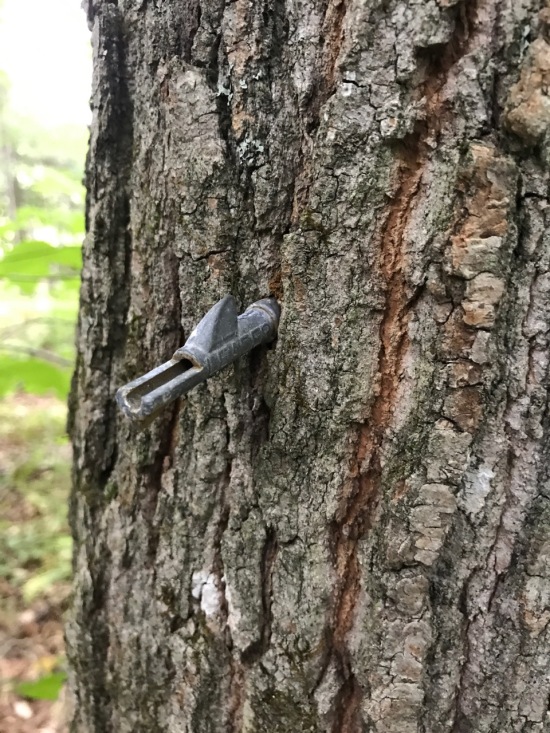
Open Ambient is a soundscape project that employs ambient sound recording, data sonification, photography, GPS, and place-based experience in an exploration of the “Sugarbush” at Sterling College in Craftsbury Common, Vermont. 

Over the spring, summer, and fall of 2018, I spent many hours in a 10 acre section of mixed hardwood forest that is dominated by more than 100 sugar maple trees, most of which are tapped each spring for their sap, which is then boiled in Sterling College’s sugarhouse to make maple syrup for use in the College kitchen. 

One result of my time with the maples is a 4-track playlist of sounds inspired by the relationship between humans, the trees, and climate change.

The four tracks of Open Ambient: Maple Acoustics are a sonic exploration of the potential impacts of climate change on maple syrup production in the Sterling College, VT sugarbush. Data used to drive the music include the 2% ‘typical’ sugar content in sugar maple sap; a projected 20% decrease in sap sugar content by 2100; the 1.6% sugar content projected at the end of the century; and the 40:1 ratio of sap required to syrup produced, which will increase over time given projected warming temperatures. All 4 pieces are overlaid atop ambient sounds from the sugarbush recorded over 2 sessions in summer 2018.

“Open Ambient” is borrowed from the work of philosopher Susanne Langer.

Listen to Open Ambient on SoundCloud

Radical Ecologies [call for proposals]

Radical Ecologies: (Re)Grounding Digital Pedagogy

A Special Session proposal for the 2014 MLA Convention

This special session seeks dynamic workshop-style presentations to engage participants in new ecologies of learning and leading edge ideas that connect ecological and educational systems. The session aims to explore the idea that technology and ecology need not be mutually exclusive and that they can play an essential role in the humanities classroom.

Drawing on points of intersection between experiential liberal arts education, digital humanities, biomimicry, sustainability, and ecopsychology, ‘Radical Ecologies’ will engage instructors and administrators in course development strategies and in helping students plan their own learning by using a systems approach to curriculum design.

This session is proposed to be an interactive and engaging series of workshops that enable participants to (1) take away tangible first steps to implementing ecologically-based digital course and curriculum design and (2) recognize the opportunities for learners at all levels in thinking experientially and ecologically about curriculum design.

Questions might include:

  • How can ecological thinking provide a model for a more intentional and dynamic liberal arts pedagogy?
  • Can digital technologies help us develop more ecologically focused learning environments and curricula?
  • How can teachers integrate ecological thinking into new and existing courses, units, and overall curriculum design?
  • Is there a role for ecological thinking in developing humanities curricula?
  • How can ecological concepts (re)shape digitally-inflected pedagogy?

Please email questions and/or a 250-400 word abstract by 1 March 2013 to Pavel Cenkl at pcenkl@sterlingcollege.edu.

For more on the MLA and convention: http://www.mla.org/

postdigital

Okay.

I admit it. I have a weakness for jargon.

I came across the (new-to-me) term postdigital in a tweet earlier this week, and try as I might, I’ve traced but few uses of the term outside of a handful of references — in particular in explorations of technological/human interrelationships in music and art.

In their now more than decade-old-book, The Postdigital Membrane, Robert Pepperell and Michael Punt sketch out postdigital as intending

to acknowledge the current state of technology whilst rejecting the implied conceptual shift of the ‘digital revolution’ – a shift apparently as abrupt as the ‘on/off’, ‘zero/one’ logic of the machines now pervading our daily lives. New conceptual models are required to describe the continuity between art, computing, philosophy and science that avoid binarism, determinism or reductionism.

Some of the stark binaries that Pepperell and Punt see as a challenge to a dynamic human system of interactions and experiences are certainly mitigated by the development of integrative model and thinking in systems and network paradigms that pervade our current moment of technological engagement.

Yet, now that the machine ecology is so pervasive, there is much to be said for thinking beyond the tools and the opportunities they afford to how we actually communicate, collaborate, think, and learn.

Pepperell and Punt go on:

The very unpredictability and ambiguity of human experience – its most valuable features – are being reconciled in the binary codes of digital processing . . . . These amputated descriptions expose the need for more flexible metaphors with which to describe the stable yet dynamic reality of the postdigital age.

In my admittedly superficial, wiki-borne knowledge  about the term, it’s apparent that postdigital has still not migrated far from its origins in acoustics, applied, and visual art. And in spite of its being fairly dated, postdigital makes contemporary sense as part of our technological present as a way to think about our engagement with ubiquitous technology–specifically, how does our use of digital tools and media define new and hybrid forms of discourse, interwoven cultural identities, and a perpetually networked social paradigm?

How, in other words, can we find a way of talking about “the digital” as more than just a quiver of  tools (albeit really cool ones), but rather a way to demonstrate our evoloving progressive, dynamic, and experiential engagement with communities and ideas?

Update:

In a timely a short piece at The Wall Street Journal’s Deloitte Insight yesterday, Suketu Gandhi defines “the postdigital enterprise” as one  in which business leaders have a choice to either “take your existing processes and apply these new technologies to them” on one hand, or rethink the process that technologies allow you to engage in.

Gandhi outlines”the big five disruptive technologies” which can help guide the direction of enterprise, most of which resonate quite clearly with aspects of the digital ecosystem I’ve been exploring on this blog:

  • social
  • mobility
  • analytics
  • cloud
  • cyber security

Nice as it is to see postdigital get traction in more mainstream media, it also underscores that much of the ubiquity of computing today is of course driven by opportunities to monetize social interactions and shifts in cultural perception. Not my intent here, but certainly illustrative of how insinuated culture and commerce often are.