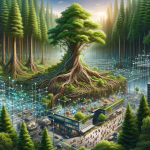
Unde aether sidera pascit?
Lucretius, De Rerum Natura I.231
On this World Philosophy Day, I find myself in the not-always comfortable position of recognising just how the ever-present movement of our world can pull, unravel, remake, and how stillness and rest are nonetheless intrinsic elements of our general dance through the world.
Yesterday saw me at the gym, perhaps embodying this (non)contradictory complexity when I was walking (rather than running) uphill (on a level floor) on a treadmill (rather than outside) as I continue to rehabilitate following a vertebra fracture after a fall 16 days ago. I counted the fractional kilometres as they digitally ticked by, watched the slope increase on the screen as I felt it steepen beneath me, and, over the better part of an hour, got nowhere at all, although my watch registered I’d walked precisely 5k.
Movement has been a profoundly important part of my life — across personal achievements and aspirations through my endurance running Climate Run project — and professional initiatives like designing the MA Movement Mind and Ecology at Schumacher College, undergraduate trail running and climbing courses I taught at Sterling College, and more recently an evolving engagement with networks and relationships, which draws from a life woven many strands, though here principally from my more than 30 years of endurance running and 20 years of academic leadership to help inform a (re)imagining of what active learning across networks — what the future of education — could become.

My recent work with colleagues on regenerative learning networks is everywhere insinuated with the mycelia of complexity theory, distributed materiality, ethico-onto-epistemologies, relationality, assemblages, living-systems thinking, agential realism, movement ecology, and a reality that ‘always presents proliferating multiplicities‘.
Much like Tim Morton suggests, always, ‘here is shot through with there‘, these ideas move through conversation, writing and practice — themselves building a relational network that is always in the process of becoming that
enfolds, refolds, reintegrates, generates, regenerates and spirals both inwards and outwards in an energetic dance that supports the whole while expanding outward to create new community clusters wherever tendrils of learning reach into new places, take root and flourish. (Cenkl, Transformative Learning)
This World Philosophy Day, UNESCO invites us to participate in a ‘collective exercise in free, reasoned and informed thinking on the major challenges of our time’. I would add not only that I wish we could devote more than a day to such thinking, but even more so that the practice and action engendered by free, reasoned, and informed thinking is more critical than ever. Urgently putting in practice
In the face of mounting ecological and social crises, the urgency for a public-facing philosophy is amplified. Such a philosophy inspires us not only to challenge definitions and enactments of power and ideology, but also to actively contribute to the creation of new regenerative networks and interconnections that foster relationships that are holistic, resilient, cooperative, inclusive, adaptive and living-systems oriented.
Although I hope to soon return to more fluid movement over undulating terrain, the fluid metronomic stillness of yesterday’s treadmill had me ‘daydreaming about something not real‘ whilst ideas coalesced and flowed through my emergent movements, shaping abstraction into expression as seed and dye into tapestry, weaving together threads of the tangible and ethereal in a dance of possibility.





 Ecologies of Knowing