World Philosophy Day

World Philosophy Day

Unde aether sidera pascit?
Lucretius, De Rerum Natura I.231

On this World Philosophy Day, I find myself in the not-always comfortable position of recognising just how the ever-present movement of our world can pull, unravel, remake, and how stillness and rest are nonetheless intrinsic elements of our general dance through the world.

Yesterday saw me at the gym, perhaps embodying this (non)contradictory complexity when I was walking (rather than running) uphill (on a level floor) on a treadmill (rather than outside) as I continue to rehabilitate following a vertebra fracture after a fall 16 days ago. I counted the fractional kilometres as they digitally ticked by, watched the slope increase on the screen as I felt it steepen beneath me, and, over the better part of an hour, got nowhere at all, although my watch registered I’d walked precisely 5k.

Movement has been a profoundly important part of my life — across personal achievements and aspirations through my endurance running Climate Run project — and professional initiatives like designing the MA Movement Mind and Ecology at Schumacher College, undergraduate trail running and climbing courses I taught at Sterling College, and more recently an evolving engagement with networks and relationships, which draws from a life woven many strands, though here principally from my more than 30 years of endurance running and 20 years of academic leadership to help inform a (re)imagining of what active learning across networks — what the future of education — could become.

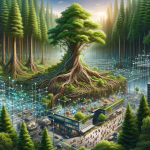
Ecological and relational networks, DALL•E

My recent work with colleagues on regenerative learning networks is everywhere insinuated with the mycelia of complexity theory, distributed materiality, ethico-onto-epistemologies, relationality, assemblages, living-systems thinking, agential realism, movement ecology, and a reality that ‘always presents proliferating multiplicities‘.

Much like Tim Morton suggests, always, ‘here is shot through with there‘, these ideas move through conversation, writing and practice — themselves building a relational network that is always in the process of becoming that

enfolds, refolds, reintegrates, generates, regenerates and spirals both inwards and outwards in an energetic dance that supports the whole while expanding outward to create new community clusters wherever tendrils of learning reach into new places, take root and flourish. (Cenkl, Transformative Learning)

This World Philosophy Day, UNESCO invites us to participate in a ‘collective exercise in free, reasoned and informed thinking on the major challenges of our time’. I would add not only that I wish we could devote more than a day to such thinking, but even more so that the practice and action engendered by free, reasoned, and informed thinking is more critical than ever. Urgently putting in practice

In the face of mounting ecological and social crises, the urgency for a public-facing philosophy is amplified. Such a philosophy inspires us not only to challenge definitions and enactments of power and ideology, but also to actively contribute to the creation of new regenerative networks and interconnections that foster relationships that are holistic, resilient, cooperative, inclusive, adaptive and living-systems oriented.

Although I hope to soon return to more fluid movement over undulating terrain, the fluid metronomic stillness of yesterday’s treadmill had me ‘daydreaming about something not real‘ whilst ideas coalesced and flowed through my emergent movements, shaping abstraction into expression as seed and dye into tapestry, weaving together threads of the tangible and ethereal in a dance of possibility.
Network Philosophy: Sympoiesis, Ideology and Power

The possibilities of a new network philosophy that engages with principles of critical realism and system-oriented ontology points toward a new pathway that explores the role of ideology and power in relational network and organisational structures — one that could help articulate a level network ontology as an emergent relational space in the process of becoming. 

Particularly in times of crisis — ecological, social, political, economic — global or organisational — there is an imperative for us to be open to entangling with the emergence of incipient and unexpected events inherent in complexity. In exploring what “making with” can mean in Times of Trouble, Dona Haraway concludes, we always only ever “become-with each other, compose and decompose each other, in every scale and register of time and stuff in sympoietic tangling, in ecological evolutionary developmental earthly worlding and unworlding.”

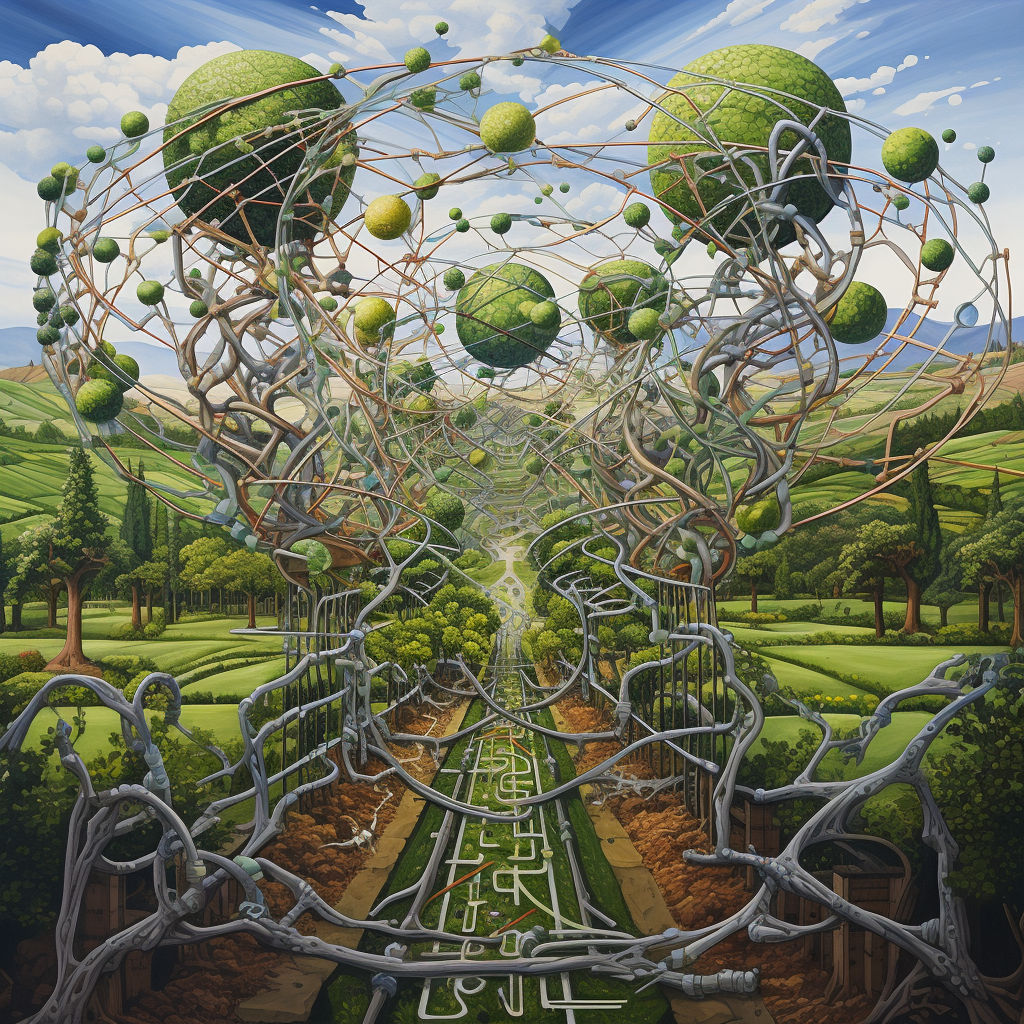
Network Philosophy: Structures, Scholarship, Nature & Gardens (Midjourney)

As a brief thought experiment — how might layering sympoiesis within architectures of network agency, ideology and power help us to re-imagine network and organisational structures?  Can relationships themselves have agency? Drawing from influences of new materialism, movement philosophy, and critical realism (among other threads) can help focus the dynamic interplay of all material entities and interrogation of embedded binaries, boundaries and hierarchical structures, whilst recognising how ideologies shape actions, interactions and power relationships within organisations and networks such that they can also be reinforced, challenged, or transformed by these actions and interactions, which can, in turn, provide fertile terrain for reimagining organizations.

(Yes, I do note the length of the previous sentence — itself a meandering ideational desire line)

Though individually these concepts are not necessarily novel, imagining an organisational network within which desire lines are themselves active participants in shaping, relating, connecting and co-becoming within and across ideological performativities and embedded networks of power (think Žižek, Foucault, Deleuze & Guattari, and more), there is a new space to reimagine relationality, build alliances, and forge new collaborative pathways.

Engaging complexity across dynamic and adaptive ontologies and network structures, distributed agency, relational iterations and collaborative cultures, responsiveness and adaptability  — all foundational tenets of new network and organizational design — can yield a level ontology where all not only entities, human or more-than-human, are seen as actants with agency, but where relational spaces (like links in a network) serve as active and fully engaged participants.  In organizational design, this is apparent in flat, non-hierarchical structures which emphasise distributed agency, a commitment to regenerative culture, and an ethics embedded in ecological and social justice. 

We must reimagine our networks and organisations through the lens of a level ontology and engage with the non-hierarchical, the inter-relational, and the evolving, charting a course towards a more adaptable, resilient, and just future. This journey, underpinned by the foundational tenets of new network and organisational design, challenges us to navigate uncertainty, adapt to change, and embrace possibilities presented by the incipient relational spaces we are co-creating. It is, in essence, an invitation to a new philosophy of networks and organisations — one where all entities and relational spaces are seen, heard, and valued equally in their dynamic interplay, and where resilience is built through our shared commitment to regenerative culture, ecological balance, and social justice.

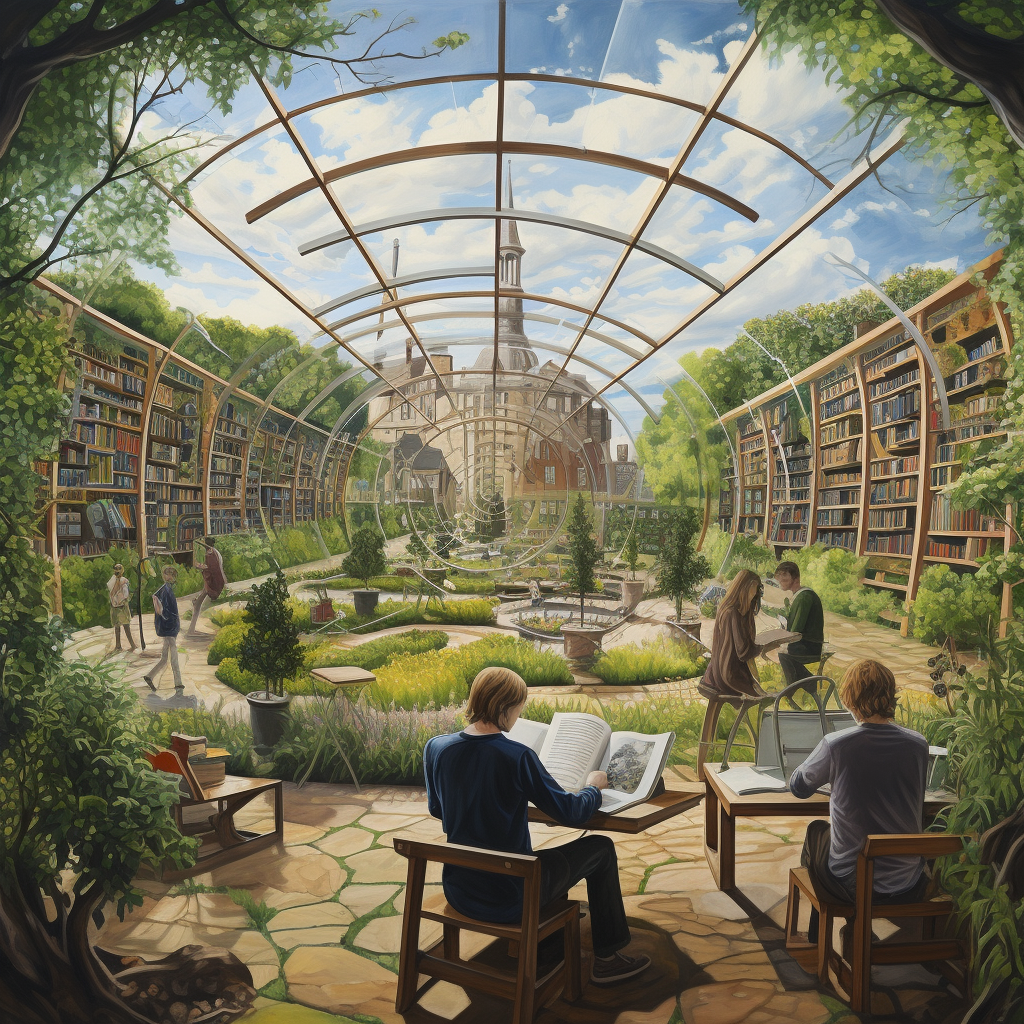
Network Philosophy: Structures and Scholarship (Midjourney)