The possibilities of a new network philosophy that engages with principles of critical realism and system-oriented ontology points toward a new pathway that explores the role of ideology and power in relational network and organisational structures — one that could help articulate a level network ontology as an emergent relational space in the process of becoming.
Particularly in times of crisis — ecological, social, political, economic — global or organisational — there is an imperative for us to be open to entangling with the emergence of incipient and unexpected events inherent in complexity. In exploring what “making with” can mean in Times of Trouble, Dona Haraway concludes, we always only ever “become-with each other, compose and decompose each other, in every scale and register of time and stuff in sympoietic tangling, in ecological evolutionary developmental earthly worlding and unworlding.”
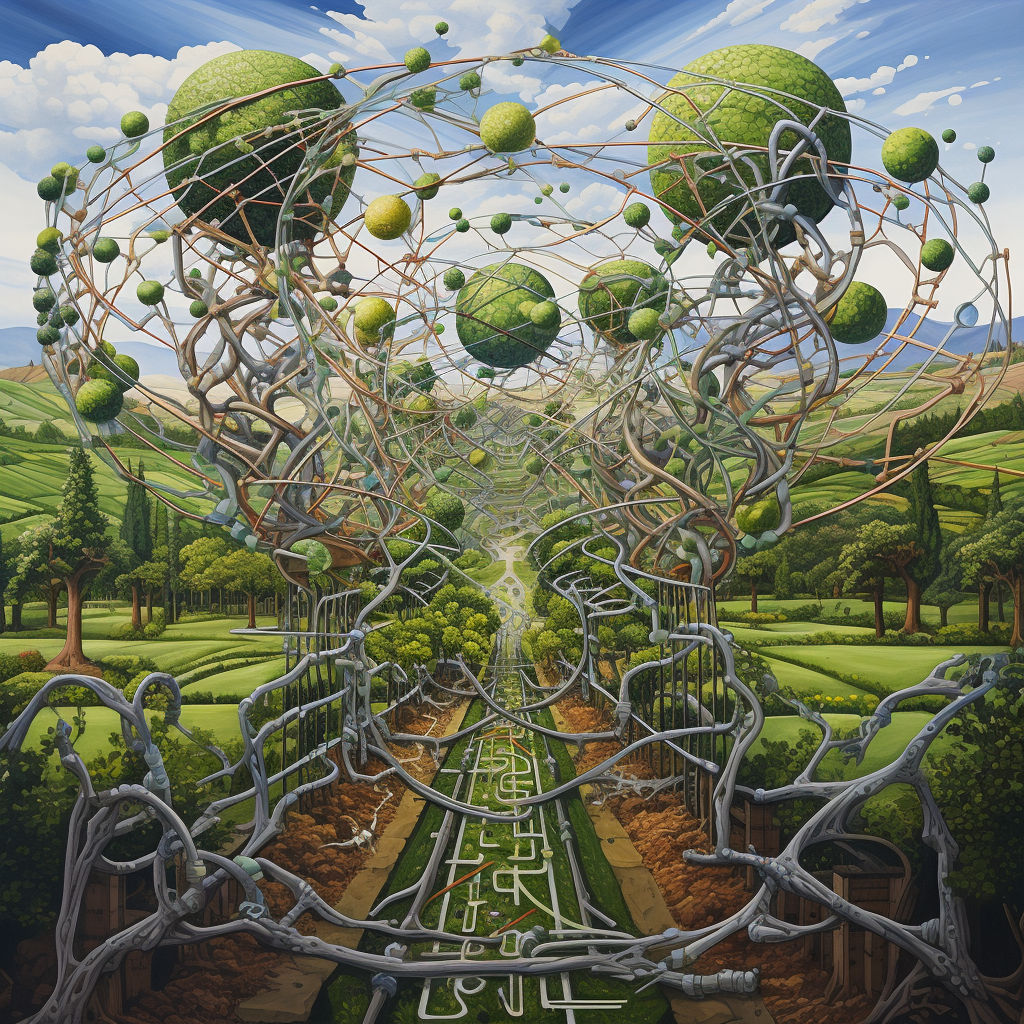
As a brief thought experiment — how might layering sympoiesis within architectures of network agency, ideology and power help us to re-imagine network and organisational structures? Can relationships themselves have agency? Drawing from influences of new materialism, movement philosophy, and critical realism (among other threads) can help focus the dynamic interplay of all material entities and interrogation of embedded binaries, boundaries and hierarchical structures, whilst recognising how ideologies shape actions, interactions and power relationships within organisations and networks such that they can also be reinforced, challenged, or transformed by these actions and interactions, which can, in turn, provide fertile terrain for reimagining organizations.
(Yes, I do note the length of the previous sentence — itself a meandering ideational desire line)
Though individually these concepts are not necessarily novel, imagining an organisational network within which desire lines are themselves active participants in shaping, relating, connecting and co-becoming within and across ideological performativities and embedded networks of power (think Žižek, Foucault, Deleuze & Guattari, and more), there is a new space to reimagine relationality, build alliances, and forge new collaborative pathways.
Engaging complexity across dynamic and adaptive ontologies and network structures, distributed agency, relational iterations and collaborative cultures, responsiveness and adaptability — all foundational tenets of new network and organizational design — can yield a level ontology where all not only entities, human or more-than-human, are seen as actants with agency, but where relational spaces (like links in a network) serve as active and fully engaged participants. In organizational design, this is apparent in flat, non-hierarchical structures which emphasise distributed agency, a commitment to regenerative culture, and an ethics embedded in ecological and social justice.
We must reimagine our networks and organisations through the lens of a level ontology and engage with the non-hierarchical, the inter-relational, and the evolving, charting a course towards a more adaptable, resilient, and just future. This journey, underpinned by the foundational tenets of new network and organisational design, challenges us to navigate uncertainty, adapt to change, and embrace possibilities presented by the incipient relational spaces we are co-creating. It is, in essence, an invitation to a new philosophy of networks and organisations — one where all entities and relational spaces are seen, heard, and valued equally in their dynamic interplay, and where resilience is built through our shared commitment to regenerative culture, ecological balance, and social justice.
 Ecologies of Knowing